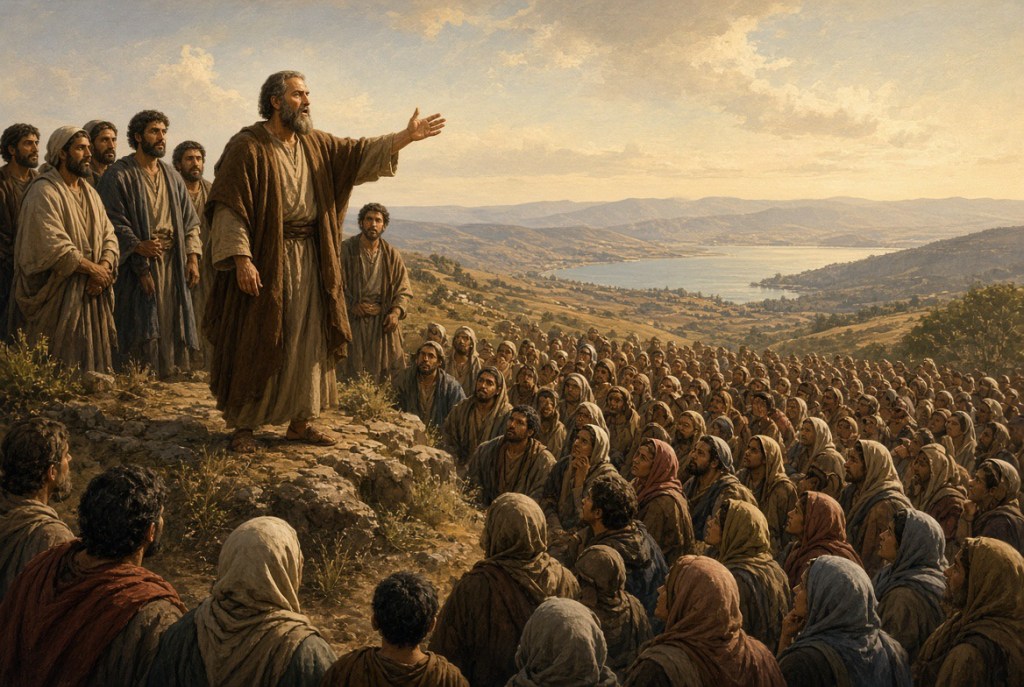
Romans 1:8–17
Paul has already introduced himself as a man owned by Christ, called by Christ, and set apart for the gospel of God. He has rooted that gospel in the Scriptures and in the Son who was born according to the flesh and declared the Son of God with power by the resurrection. Before he moves further, it is worth pausing to ask what we mean when we speak of the gospel itself.
When you hear the word gospel, what comes to mind? A message? A feeling? A set of doctrines? A way of life?
The gospel is first and foremost a message. It is an objective, historical proclamation about what God has done in Christ to save sinners. The word itself means good news. News is an announcement of facts. In this case it is the announcement of divine acts accomplished through the person and work of the Lord Jesus Christ.
At its core the gospel declares that God is holy and righteous, that mankind is sinful and under just condemnation, that Jesus Christ the eternal Son of God took on human flesh, lived in perfect obedience to the law, died a substitutionary death for sinners, was raised bodily from the dead, and now reigns as Lord. We are called to repent and believe upon Him and His finished work. This salvation is granted by grace alone, through faith alone, in Christ alone.
In short, the gospel is a message about what Christ has done, not what we do. It produces feelings, but it is not defined by them. It is summarized by doctrine, but it is not a system of ideas detached from redemptive history. It results in a transformed way of life, but it is not itself a way of life.
With that clear, we return to the text. In Romans 1:8–17 Paul does not define the gospel abstractly. He shows us what it does to a man who has been claimed by it.
“First, I thank my God through Jesus Christ for you all, because your faith is being proclaimed throughout the whole world.”
Paul begins with gratitude. He does not thank the Romans for their gifts, their influence, or their progress. He thanks God for their faith. Faith is never a human achievement. It is the evidence of grace. Their faith had become visible. It was being spoken of beyond their own city. The Christian faith is not a private possession we keep safely within the walls of our own gathering. It is a public allegiance to Christ that bears fruit others can see.
Paul’s first movement is not correction or instruction. It is thanksgiving. Whatever good exists in the church is the result of God’s grace, not human effort. Gratitude comes before duty. The gospel produces a thankful heart before it produces an obedient one. This order matters. When we begin with what we must do rather than with what God has already done, we subtly shift the foundation. Paul will not allow it. Grace first, then everything else.
He continues: “For God, whom I serve in my spirit in the gospel of His Son, is my witness as to how without ceasing I make mention of you, always in my prayers earnestly asking, if perhaps now at last by the will of God I may succeed in coming to you.”
Paul describes his entire life as service in the gospel. Not for the gospel, as though ministry were a way of securing what Christ has already finished, but in the gospel, flowing from it, shaped by it, empowered by it. This is worship language. He serves God from the inner man. And that service is expressed in unceasing intercession for people he has never met. The gospel does not produce isolated believers. It produces men and women who carry others before the throne of grace.
There is a quiet difference here that is easy to miss. Serving God for the gospel seeks to earn or secure what only Christ can provide. Serving God in the gospel flows from Christ’s finished work and is sustained by the same grace that saved us. We do not serve to be saved. We serve because we are saved. This distinction frees the Christian from both pride and despair. Our service is not the price of the gospel. It is the fruit of it.
Paul longs to see them so that he may impart some spiritual gift and they may be strengthened. Then he immediately clarifies: “that is, to be mutually encouraged, while among you, by each other’s faith, both yours and mine.”
Even an apostle expects to be strengthened by the faith of ordinary believers. Gospel ministry is never one-sided. The church is not a stage for gifted individuals to perform while others merely receive. It is a living body in which every member both gives and receives. Clerical pride that says “I only give” and consumer Christianity that says “I only receive” both fail to understand the mutual dependence the gospel creates. Paul models a different way. He is not above the need for encouragement. He is not beneath the responsibility to give it. Shared union with Christ is deeper than specific callings.
Paul is not after recognition. He is after fruit, conversions and spiritual growth among the Gentiles, just as among others. His measure of success is not visible results or human applause, but faithfulness to the gospel entrusted to him. This quietly challenges the way we often measure our own lives and the life of the church. Faithfulness is not the same as fruitfulness we can count. Obedience is not the same as outcomes we can control. Paul planned to come to Rome many times and was prevented. The delay did not cancel the calling. The heart of a man plans his way, but the Lord establishes his steps.
Then comes the striking confession: “I am under obligation both to Greeks and to barbarians, both to the wise and to the foolish.”
Paul sees himself as a debtor. Not because he earned the gospel, but because he received it freely. Grace enlarges the heart and makes it communicative. The man who has been freely given what he could never deserve feels a joyful obligation to make Christ known without favoritism. The gospel is for every kind of person, the educated and the uneducated, the cultured and the overlooked, those who seem near and those who seem far. Withholding it contradicts its very nature. Receiving grace does not produce pride. It produces a debt of love.
Therefore he is eager to preach the gospel even in Rome. Rome was powerful, cultured, and intimidating. Paul’s eagerness does not rest on his own ability or rhetorical skill. It rests on the message itself.
“For I am not ashamed of the gospel, for it is the power of God for salvation to everyone who believes, to the Jew first and also to the Greek.”
Paul does not say the gospel contains power. He says it is the power of God. It is the result of divine action. Salvation is not achieved by human will or effort. The order matters, Jew first, then Greek, because it reflects God’s redemptive plan unfolding through history. Yet the power is the same for both. The gospel does not wait for the right audience or the perfect conditions. It is God’s power for everyone who believes.
“For in it the righteousness of God is revealed from faith to faith; as it is written, ‘But the righteous will live by faith.’”
Here is the heart of the matter. The righteousness of God is not merely His justice by which He judges. It is the righteousness He provides to sinners through faith alone. It is revealed and it is given. Faith is not a work that earns it. Faith is the empty hand that receives it. From beginning to end, the righteous live by faith, not by performance, not by progress, not by the strength of their own grip, but by continual reliance upon the One who has already accomplished everything necessary.
This is why Paul is not ashamed. The gospel does not depend on him. It is God’s power, it reveals God’s righteousness, and it creates the very faith it commands. The gospel sustains those who live by that faith.
Romans 1:8–17 is not merely Paul explaining the gospel. It is Paul living from it. The gospel shapes how he prays, how he serves, how he measures success, how he understands obligation, how he relates to the church, and how he faces the world without shame. Everything in his life flows from this single reality: God has revealed a righteousness he did not earn and could never achieve.
The question this passage presses upon us is simple, yet searching:
– Are we living from the gospel, or are we still trying to live for it?
– Are we serving from acceptance, or subtly trying to serve toward it?
– Are we measuring faithfulness by obedience and trust, or by results and recognition?
– Are we humble recipients of grace who feel a joyful obligation to make Christ known?
– Are we confident in the power of the gospel, even in places and conversations that feel intimidating?
The gospel does not begin with our search for God. It begins with God’s claim upon us in His Son. And those who have been claimed find, in that very claim, both their identity and the power to live.
If you are reading these words and have never trusted in Christ, hear this clearly. The gospel is not advice about how to improve yourself. It is news about what God has already done. You do not clean yourself up and then come. You come as you are, empty-handed, and receive the righteousness God freely provides in His Son. Turn from trusting yourself and trust in Christ alone. He receives all who come to Him.


Leave a Reply