
Romans 2:1–5
Paul has just finished describing the downward spiral of those who suppress the truth of God. He has shown the exchange of the Creator for the creature, the giving over to dishonorable passions, and the final collapse of a mind that no longer acknowledges God. The picture is dark, public, and unmistakable. Then, without warning, he turns.
“Therefore you are without excuse, O man, everyone who passes judgment…”
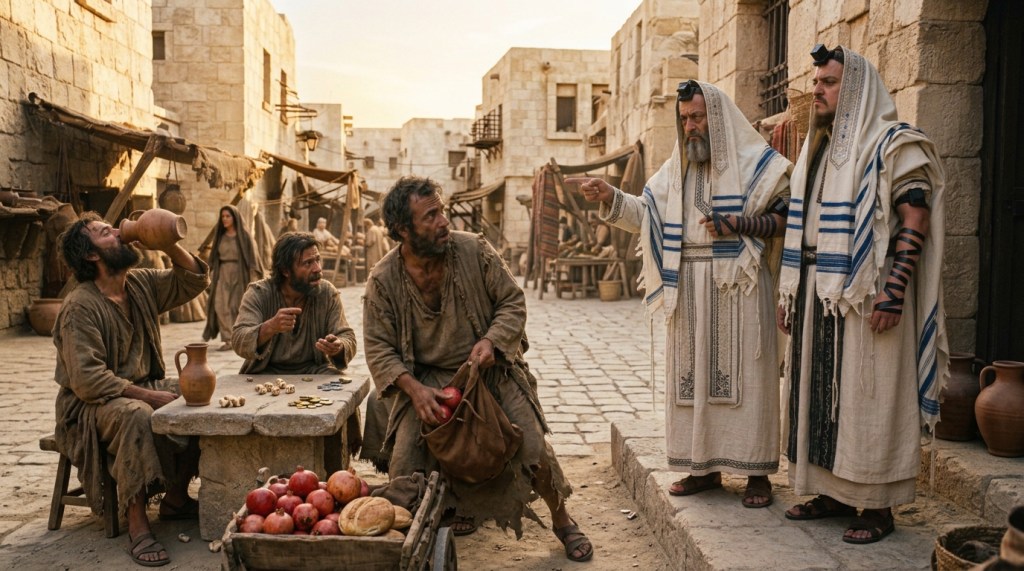
The “therefore” is deliberate. Paul is not changing subjects. He is extending the same indictment. The openly immoral man of chapter 1 is without excuse. Now the morally confident man who judges him is without excuse as well. The spotlight moves from the rebel who shakes his fist at God to the respectable person who believes he stands on higher ground.
Paul’s target is not the act of moral evaluation itself. Judgment is necessary. Discernment is required. The problem is the posture of the one who judges. “In that which you judge another, you condemn yourself; for you who judge practice the same things.” The standard you use on others is the standard that measures you. The very act of condemning sin in another becomes the evidence of your own guilt, because the same heart that produces the sins you denounce also lives in you. You may sin more discreetly, more respectably, or more selectively, but you sin. Knowledge of the law does not erase guilt; it intensifies it.
This is one of the deepest deceptions of the human heart: the belief that condemning sin in others somehow absolves sin in ourselves. We imagine that moral awareness equals moral innocence. Paul strips that illusion away. The self-righteous judge and the person he judges stand on the same ground before God: both accountable, both guilty, both in need of mercy.
“And we know that the judgment of God rightly falls upon those who practice such things.” God’s judgment is not like ours. Ours is often partial, self-serving, and selective. His is right. It corresponds exactly to the reality of sin. It is not swayed by appearance, reputation, or religious knowledge. The hypocrisy of the one who condemns while practicing the same things does not escape His notice. Moral superiority over other people cannot shield anyone from the judgment of God.
Paul presses further: “But do you presume this, O man… that you will escape the judgment of God?” The question is sharp. Do you really think that judging others while doing the same things grants you immunity? Hypocrisy does not lessen accountability; it multiplies it. Knowing the standard and violating it anyway is not ignorance, it is willful disregard. Self-righteousness is not a safer form of rebellion. It is a more subtle one.
Then Paul turns from confrontation to the heart of God: “Or do you think lightly of the riches of His kindness and forbearance and patience, not knowing that the kindness of God leads you to repentance?”
Here is the pivot. The same God whose judgment is certain is also the God whose kindness is abundant. Kindness. Forbearance. Patience. These are not signs of indifference or approval. They are deliberate, gracious restraints. God does not immediately pour out the wrath that sin deserves. He holds back, gives space, and He waits. And that waiting is not weakness, it is mercy designed to lead stubborn hearts to repentance.
Yet many treat that kindness lightly. They interpret delay as permission. They assume silence means safety. Paul warns that this is a dangerous misreading. God’s patience is not a license to continue; it is an invitation to turn.
The alternative is sobering: “But because of your stubbornness and unrepentant heart you are storing up wrath for yourself in the day of wrath and revelation of the righteous judgment of God.” The image is deliberate. The one who despises God’s kindness does not remain neutral. He is accumulating judgment. Every refusal, every hardening, every day of unrepentance adds to what is being stored. The day is coming when that stored wrath will be revealed, and God’s judgment will be shown to be perfectly righteous. No excuses will remain. No comparisons will help. The heart that refused the kindness of God will face the justice it preferred.
Romans 2:1–5 leaves us without a safe place to hide in ourselves. Morality cannot save us. Religious knowledge cannot save us. Comparing ourselves favorably with others cannot save us. The self-righteous and the openly immoral stand together under the same verdict: guilty, without excuse, in need of mercy.
Yet this passage does not merely expose. It reveals the heart of God. The delay of judgment is not indifference. It is kindness. It is God holding out His hands while there is still time.
To those in Christ, this text calls for humility. If you stand accepted, it is not because you were wiser, more moral, or more sincere than others. It is because God was kind to you. His kindness broke a stubborn heart. Therefore you cannot look down on anyone. You live by daily repentance, resting not in your performance but in Christ’s righteousness alone. Let this passage renew gratitude and soften your heart toward others with the same patience God has shown you.
To those still outside of Christ, this is a loving warning. God’s patience is not a promise that judgment will never come. It is an invitation to flee to Christ now. Every breath is mercy. Every delay is grace. But kindness rejected becomes wrath stored up. Do not mistake God’s silence for approval. Today is not guaranteed, but today is graciously given.
The good news remains the same. The wrath described here did not simply disappear. It was poured out on Jesus Christ. On the cross, the righteous judgment of God and the immeasurable kindness of God met. The Son who never suppressed the truth, who never judged hypocritically, who never presumed upon the Father’s patience, stood in the place of sinners who did all of those things. He bore the wrath our stubborn hearts deserved so that those who repent and believe might receive forgiveness, life, and peace with God.
The kindness of God is still leading. The question is whether we will continue to think lightly of it, or whether we will finally let it lead us to repentance.


Leave a Reply