
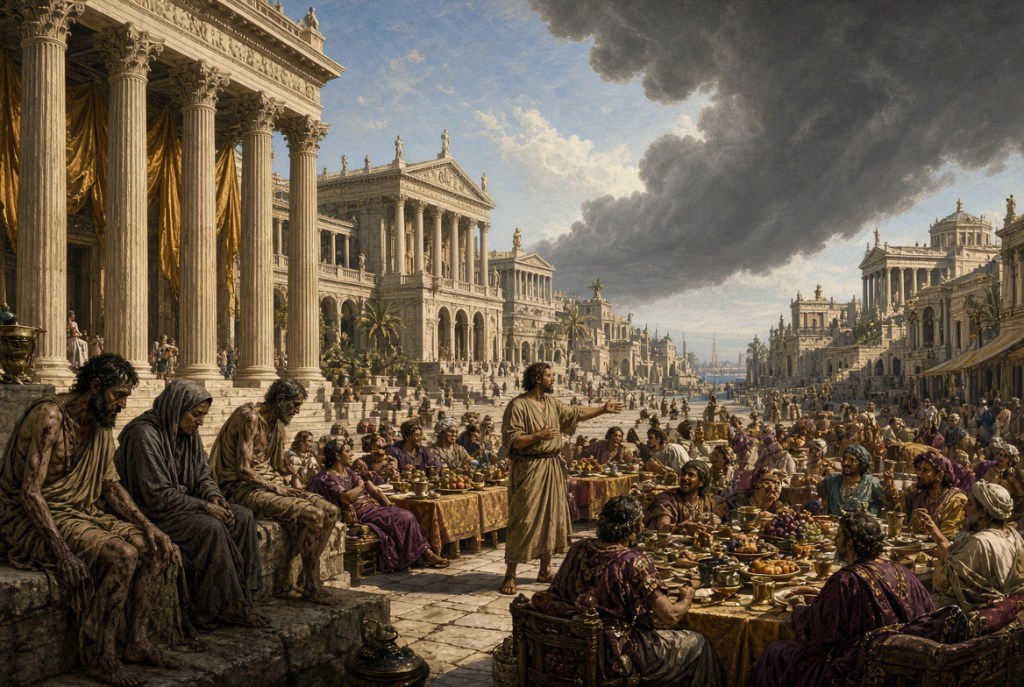
Romans 1:26–32
Paul has already shown us that the wrath of God is revealed from heaven against those who suppress the truth. He has described the exchange: the glory of the incorruptible God traded for images of corruptible things. Now the argument intensifies. The same divine judgment continues its course.
“For this reason God gave them over to dishonorable passions…”
This is the second time Paul uses the phrase. God does not merely observe human rebellion from a distance. He hands people over to the very desires they insist upon. Judgment begins not only with future punishment but with the present removal of restraint. When the heart refuses to honor God as God, the passions that remain are no longer held in check by grace. What follows is disorder; desires that abandon the design written into creation itself.
Paul speaks plainly of females exchanging the natural function for that which is unnatural, and males abandoning the natural function of the female and burning in their desire toward one another. He is not isolating one sin as uniquely unforgivable. He is showing the fruit of a deeper exchange. When the Creator is rejected, the creature’s own body and desires become the new authority. What God ordered for good is set aside for what the self demands. The “due penalty” is not arbitrary; it is the natural outworking of the error itself. Sin damages the person who practices it.
Then comes the third and final “giving over”:
“And just as they did not see fit to acknowledge God, God gave them over to an unfit mind, to do those things which are not proper…”
Here the spiral reaches its lowest point. The mind itself is now disordered. Reason remains, but moral judgment collapses. People still think, still plan, still invent; but they invent evil. Paul’s list is deliberately broad: envy sits beside murder, gossip beside hatred of God, arrogance beside inventing new forms of wrong. He mixes the socially acceptable with the spectacular so that no one can hide behind the claim of relative respectability. When God is dismissed as unnecessary, sin does not stay occasional. It saturates. People are “filled” with unrighteousness. Rebellion becomes characteristic.
The final verse drives the diagnosis home:
“…and although they know the righteous requirement of God, that those who practice such things are worthy of death, they not only do the same, but also give hearty approval to those who practice them.”
This is not ignorance. It is knowledge willfully disregarded. The moral law remains written on the heart. Humanity understands that such things stand under judgment and still practices them, and still applauds those who do. Approval is the last stage. Sin moves from private practice to public celebration. The conscience that once flinched now cheers.
Paul’s purpose is not to leave us staring into the abyss for its own sake. He is stripping away every illusion of moral neutrality. This is what the human heart produces when it refuses the knowledge of God. This is the darkness against which the righteousness of God revealed in the gospel will shine with saving power. Apart from Christ, this is not merely “the world out there.” This is the natural trajectory of every heart that remains its own master.
The questions this passage presses are searching:
- Have we treated the rejection of God as a minor matter of private belief, or do we see that it inevitably disorders desire, mind, and community?
- Are there places where we still exchange God’s design for our own preferences, even in subtler forms: comfort, control, reputation, or the quiet approval of what He calls sin?
- Do we still measure ourselves against the worst excesses of others, or have we let this text level the ground so that we stand only by grace?
- For those outside Christ: do you hear this as condemnation, or as mercy that shows you the end of the road before you reach it? The same God who judges is the God who gave His Son. You do not clean yourself up and then come. You come empty-handed, turning from self-rule to the Savior who bore the judgment sinners deserve.
- For those in Christ: this is what you were. Let the memory kill remaining pride. Let it deepen gratitude, and let it keep you vigilant. The same grace that rescued you still calls you to put to death what belongs to the old life and to walk in the newness that Christ has purchased.
Romans 1 leaves us without excuses. It does not leave us without hope. The wrath of God is real, the human heart is dark, and the list of sins is long, but the gospel is the power of God for salvation to everyone who believes. The Son who never suppressed the truth, who never exchanged the glory of God for anything lesser, stood in the place of sinners who suppressed the truth and exchanged the glory due God for that which was created. He endured the penalty. He rose. And He still receives all who come to Him.
The call remains the same: honor Him as God. Give thanks. Turn from the path that ends in death and judgment. Trust the One who alone can deliver from wrath and bring us into life.


Leave a Reply